Bait Box Liner Recovery
In mid-February Eric Bennett drove a rented truck six hours on snow-covered roads from his home in Stephenville Crossing on the west coast of Newfoundland to the tiny fishing community of Belleoram, along the Island’s South Coast, to talk to fish harvesters. In the truck bed was a large wooden bin that he had constructed during the snowy winter months, which he needed to deliver before the opening of the lobster and crab seasons this spring.
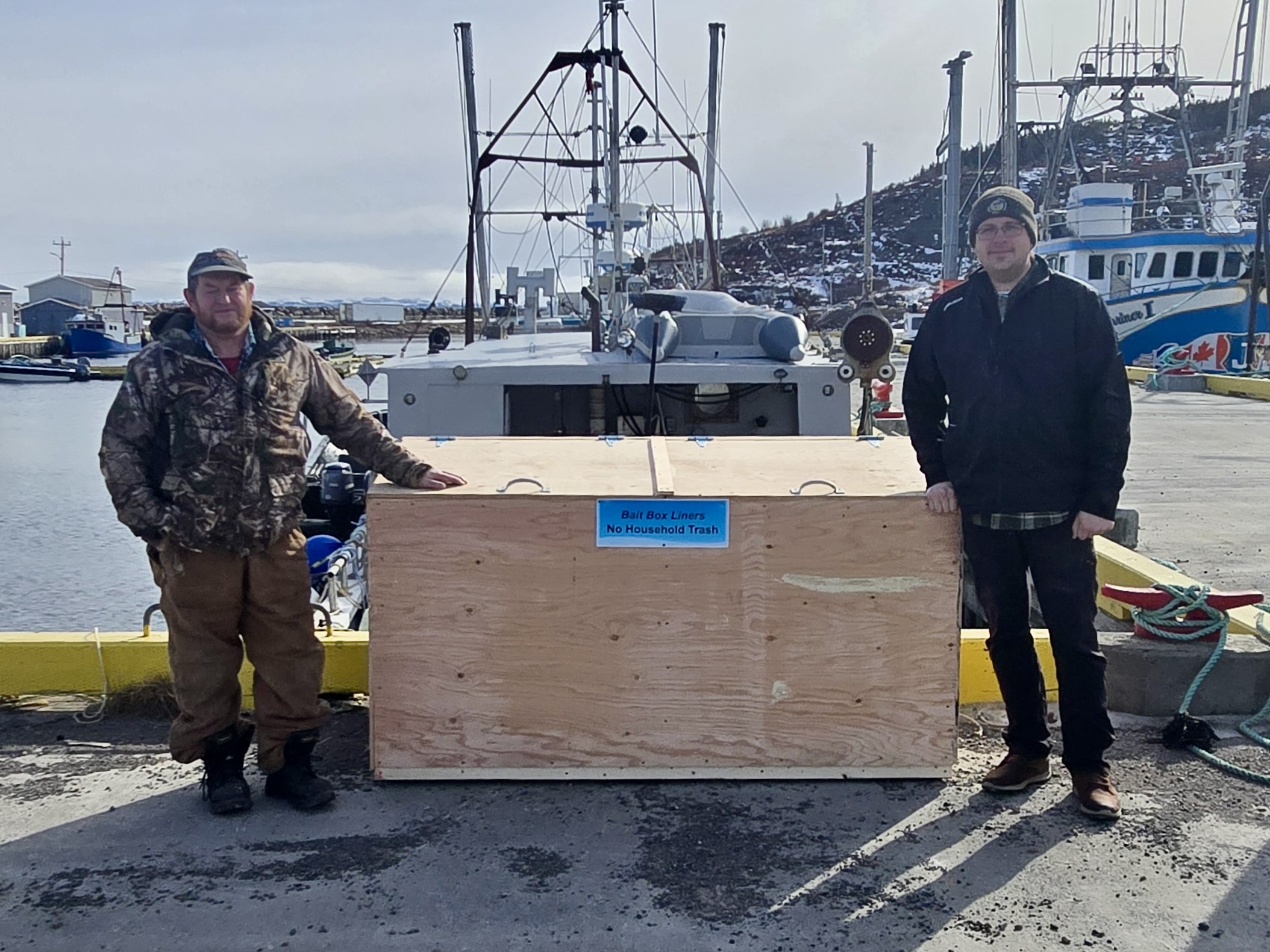
with Eric Bennett (right)
Belleoram is the most recent fishing community enrolled in a waste diversion program that prevents used bait box liners from being discarded in the sea — an action that reduces a lethal threat to marine species at risk such as leatherback sea turtle and North Atlantic right whale. This tiny fishing community is one of 36 communities in Newfoundland to enroll in the multi-year initiative funded by Fisheries and Oceans Canada (DFO) and in partnership with Intervale Associates, which implements the project along the South Coast. Eric, who works for Intervale, was looking forward to meeting up with residents.
Some of the communities along this coast are accessible only by boat, posing a challenge for delivery on five project components. Besides the bait box liner waste diversion, these include reducing poaching of Atlantic salmon, convincing harvesters to practice live release of accidentally caught wolffish, giving presentations to youth in schools, and organizing community beach clean-ups. Eric’s first task centered on the bait box liners.
Bait box liners (BBLs) are removable blue plastic liners commonly used to line bait boxes containing frozen herring bait, used in the lobster and crab fisheries. For years, many harvesters who bait their traps at sea were discarding the used liners overboard. Given the volume of bait that the industry requires for a single season, the number of liners that were discarded at sea in Newfoundland waters alone easily could have exceeded a million per year.
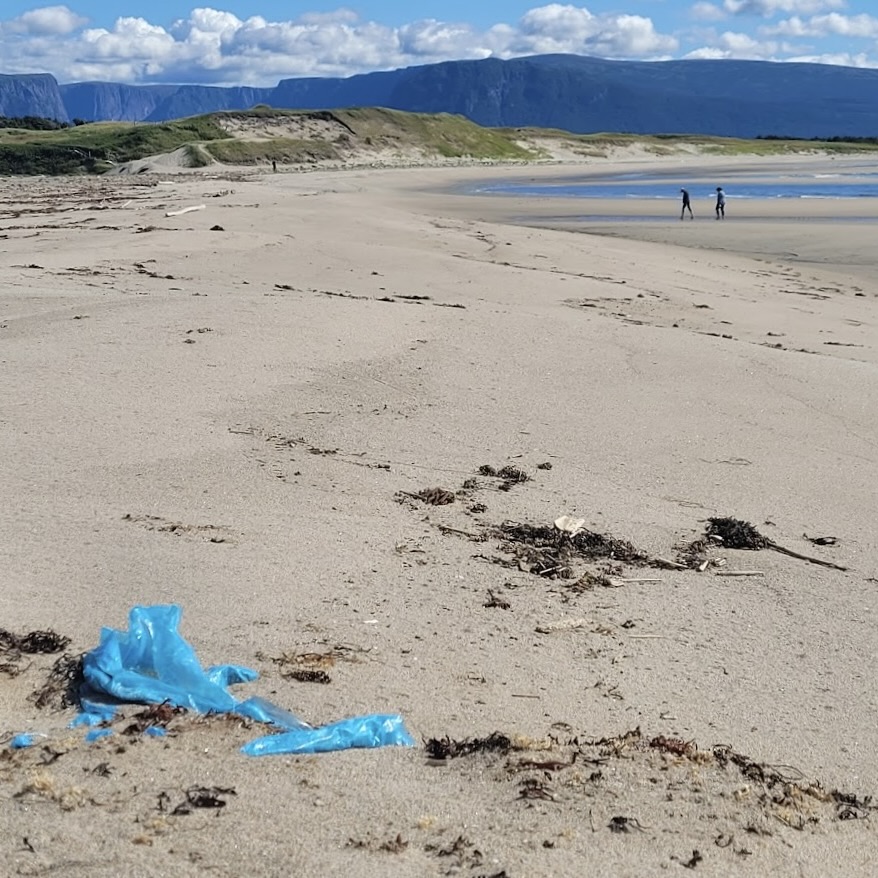
The problem is that BBLs drift in the water column, where they can become tangled in boat propellers, ingested by marine species, or washed ashore, adding to coastal pollution. When they are ingested by sea turtles and whales it can lead to starvation and death. BBLs break down into microplastics, where they become ingested by a range of organisms, including plankton.
QLF and Intervale have worked together since 2012 to develop multi-year projects in partnership with fish harvesters, communities, and DFO aimed at reducing the threats posed by BBLs and other plastic pollution. A growing body of evidence exists that BBLs are being consumed by aquatic species at risk, while microplastics are ending up in commercially harvested fish and shellfish. Since data were first recorded in the 2020 fishing season and each successive year through the 2025 season, the projects have accounted for 739,007 BBLs diverted from the sea. That number will continue to grow each year as more harbors enroll in the program.
This project would not have seen such a success were it not for the champion harvesters and harbormasters who piloted the BBL waste diversion, promoted it among their peers, and collected the data that helped convince DFO to support the project for several years. QLF and Intervale thank them for their dedication to keeping the oceans clean and reducing the threat to marine species at risk caused by plastic waste.