Strengthening Habitat Connectivity Through the Staying Connected Initiative
QLF is a leading partner in the Staying Connected Initiative (SCI), a cutting-edge, transboundary, public-private collaboration dedicated to conserving and restoring an ecologically well-connected landscape for fish, wildlife, and people in the Northern Appalachian-Acadian region and adjoining areas of northeastern North America. This region, spanning more than 80 million acres (32 million hectares), is globally significant as one of the largest remaining areas of mixed temperate forest in the world. It also is a key part of the continentally significant forested corridor provided by the broader Appalachian Mountain chain for species migrating northward in response to climate change.

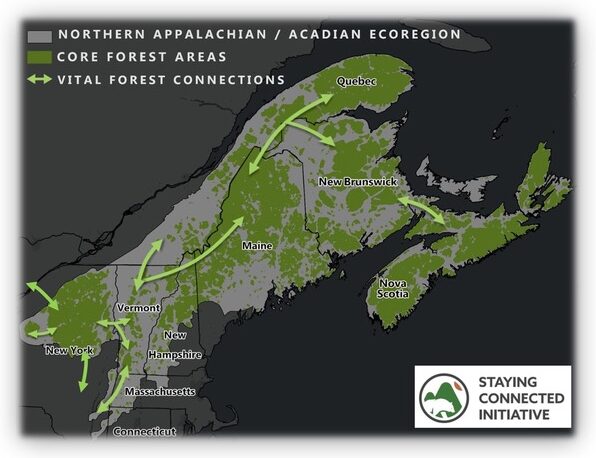
Launched in 2009, SCI has expanded to include more than 80 partners, including governmental agencies, nongovernmental organizations, academic institutions, and others in the northeastern U.S., eastern Canada, and beyond. These diverse entities are implementing an integrated, multifaceted strategy to protect and enhance terrestrial and aquatic connectivity at a number of scales, including a focus on key habitat linkages that connect large forest blocks across the region. SCI’s holistic approach integrates land protection, land use planning, community and landowner engagement, projects to help wildlife move safely across roadways, and policy work. These efforts are all informed by the best available conservation science and are woven together through effective coordination among partners at multiple scales to maximize conservation impact.
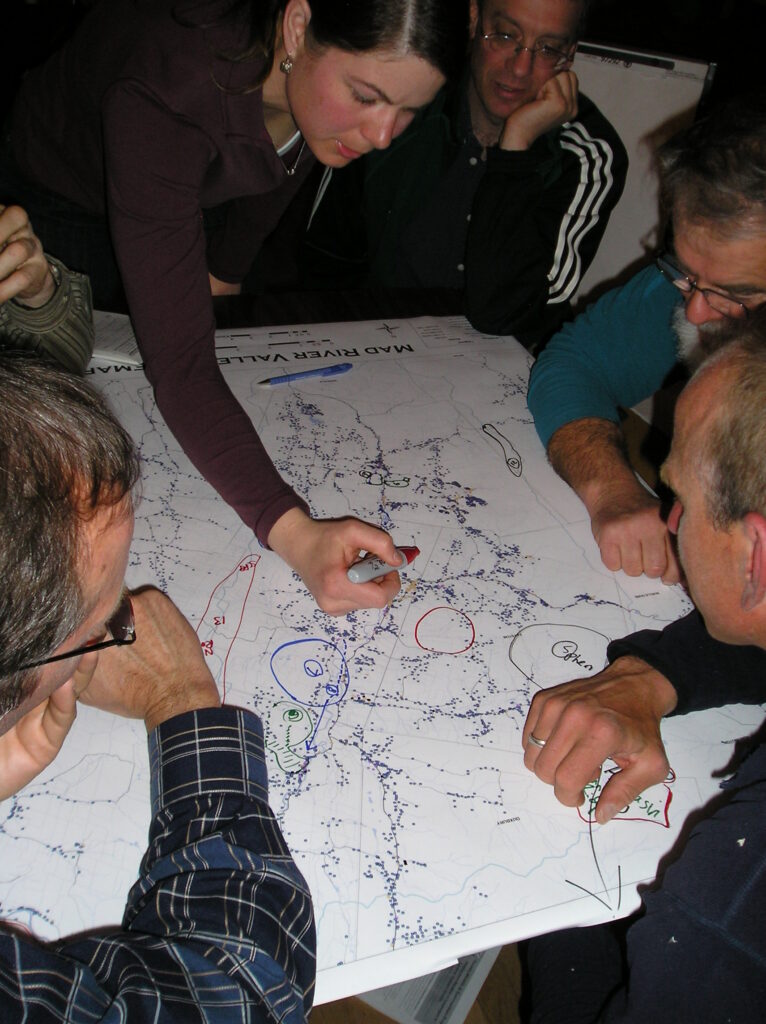
In June 2024, QLF was proud and honored to co-host the first-ever Northeastern North America/Turtle Island Connectivity Summit in Montréal/Tiohtià:ke, Québec, Canada on behalf of the SCI partnership, alongside the Center for Large Landscape Conservation (CLLC). The Summit brought together over 170 conservation leaders and practitioners to build relationships, share perspectives and approaches, and chart a path for accelerating ecological connectivity conservation and restoration within and across borders in the region.
Building on the powerful energy and ideas generated at the Summit, QLF, CLLC, and other SCI partners released a new publication in April, 2025 entitled Pathways to an Ecologically Connected Transborder Landscape. This resource highlights key opportunities, strategies, and actions to strengthen ecological connectivity and collaboration across the five easternmost Canadian provinces, seven northeastern United States, and many Indigenous territories in the region. Pathways is both a compendium of promising ideas and a call to action, helping to guide collaborative transborder efforts to connect, conserve, and restore landscapes for fish, wildlife and people across this globally significant region and beyond.
QLF also is playing an instrumental role in helping SCI strengthen strategic relationships with other key regional-scale entities and initiatives with an interest in connectivity conservation and restoration. These include the Northeast Association of Fish and Wildlife Agencies (NEAFWA), a long-standing collaborative among provincial, state, and federal agencies from Newfoundland and Labrador to West Virginia focused on sustaining and enhancing fish and wildlife populations, and a newly formed Ecological Connectivity Working Group under the New England Governors and Eastern Canadian Premiers (NEG-ECP). The NEG-ECP Working Group was established in accordance with Resolution 45-2, which was adopted by the Governors and Premiers at their 2024 Annual Conference in Boston, Massachusetts and inspired in part by the transboundary Connectivity Summit in Montreal/Tiohtià:ke a few months before. QLF is working with other SCI partners to foster the closest possible collaboration and synergy with NEAFWA and the NEG-ECP Working Group toward shared goals.
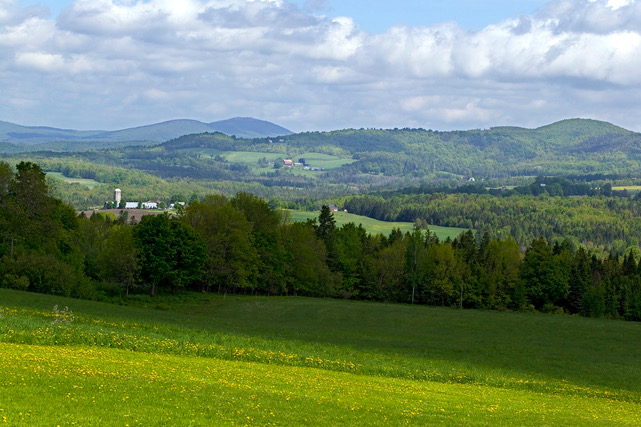
In addition, at a somewhat smaller scale, QLF is leading efforts to bring partners together across borders and cultures in two of SCI’s high-priority “linkage areas”: one known informally by some as the “Borderlands” region that includes much of northeastern Vermont, northern New Hampshire, western Maine, and adjoining areas of southern Québec; and the other a short distance to the west encompassing the Northern Green Mountains and Sutton Mountains region of northern Vermont and southern Québec. Partners have been doing great work for years in these linkages to advance connectivity conservation and restoration within their respective jurisdictions. But there has been a shortage of dialogue and collaboration across borders to look at the larger picture of these vital landscape connectors, see how the individual pieces fit together, and explore opportunities for greater synergy and impact through a more unified and integrated transboundary vision. QLF is excited to help address this gap and heighten collective action that will benefit all life in these regionally important areas.
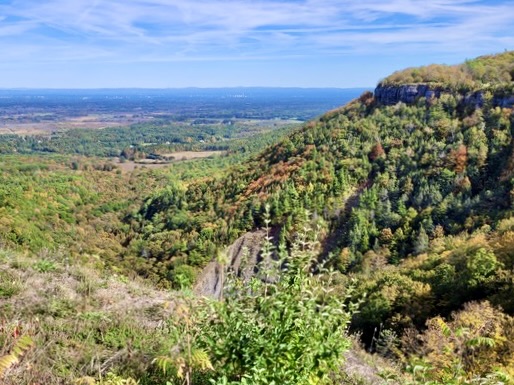
Photo Credit for Header Image: Jonathan Mauer/iStock