Landscape-Scale Transboundary Connectivity Conservation
More than a million acres of private land across the northeastern U.S. and eastern Canada have been permanently protected by partners in the Staying Connected Initiative (SCI) since it began in 2009. As an international public-private-academic partnership, SCI is uniquely positioned to do this large-landscape work. This figure is impressive, but it’s about something much bigger.
The key to the future of this expansive landscape in the Northern Appalachian/Acadian forest is keeping it well connected. These forested corridors are essential so that moose, black bear, bobcat, and countless other species can move freely — to find food, shelter, and mates and adjust their ranges in response climate change.
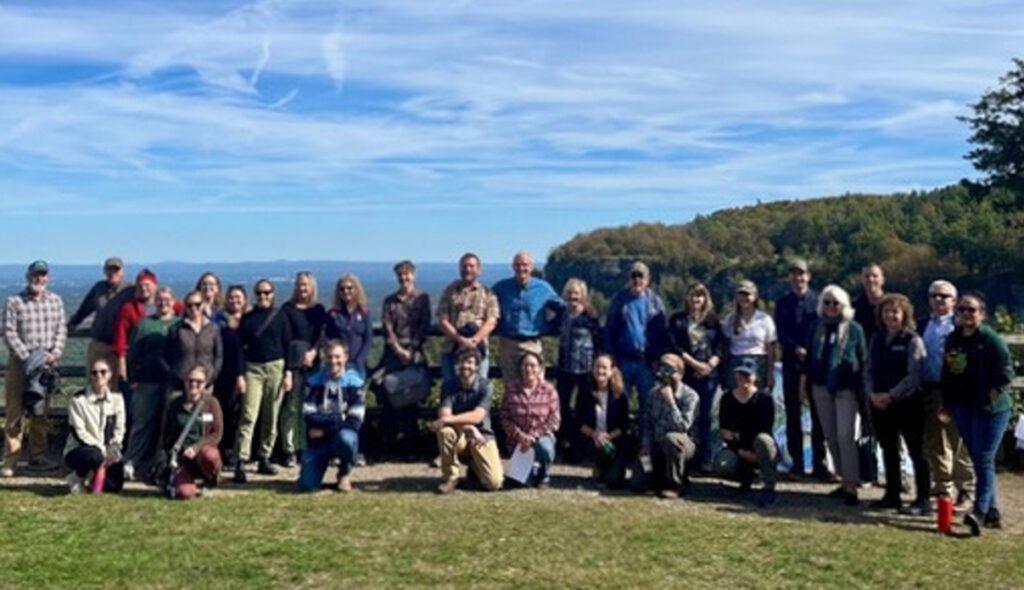
Phil Huffman, QLF Senior Vice President, Regional and Global Programs, has just returned from a bi-annual retreat with other SCI leaders held in Albany, New York. It is a challenging time for ecological connectivity work, but the group (in photo below) was energized developing a plan to build on the momentum from the past two years.
Phil remarked that “SCI is increasingly recognized as a leading example of landscape-scale transboundary connectivity conservation in North America and around the world.” Colleagues expressed how grateful they are for QLF’s key role in orchestrating the 2024 transboundary summit and the ensuing Pathways guide that is helping inform future work in the region. Look for updates in the coming months about the on-the-ground work of SCI’s 80+ partner members.