
Restoring Eider Duck Nesting Habitat in Hare Bay
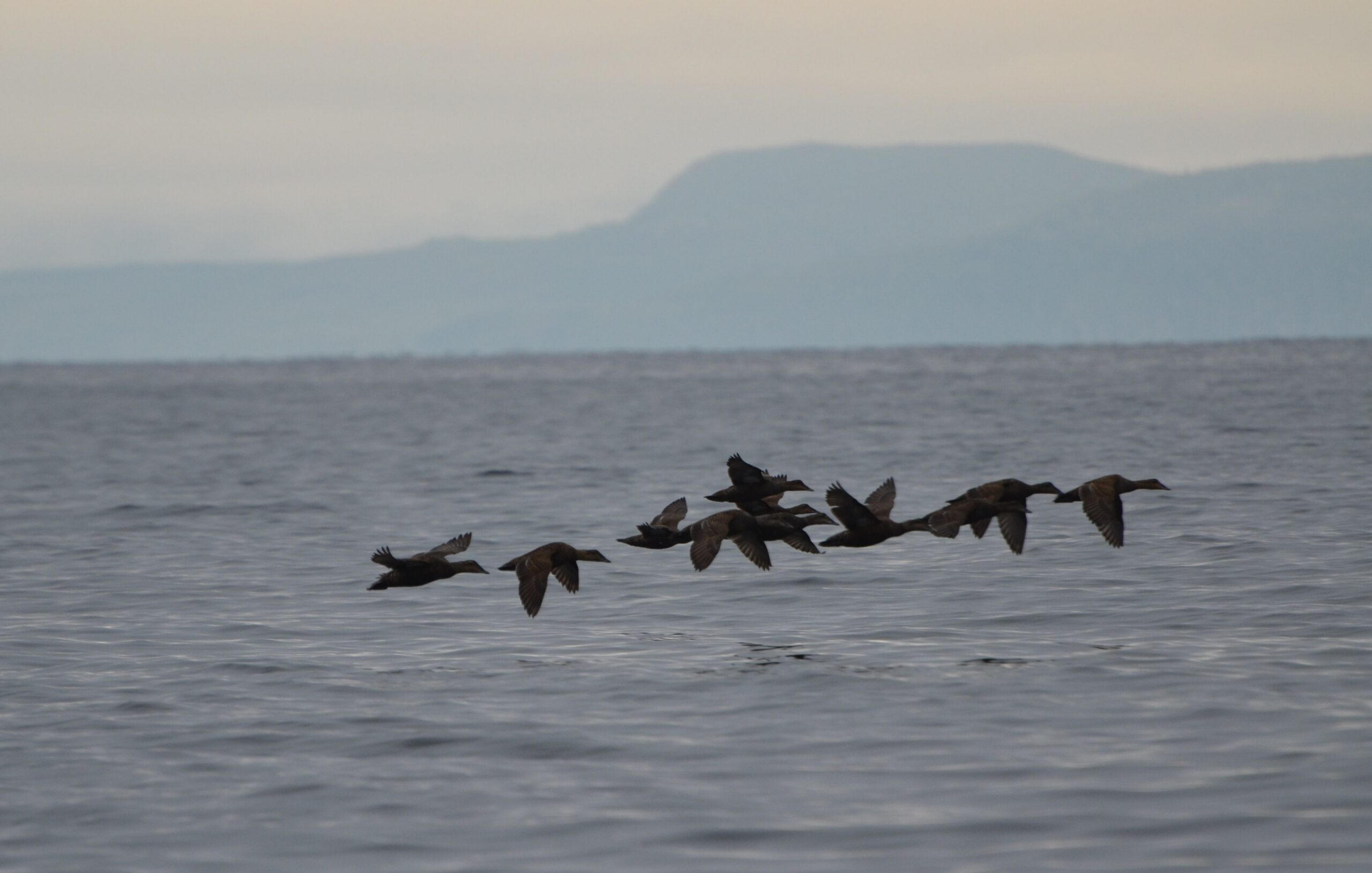
For the past decade, QLF has been working with residents of the Town of Main Brook on habitat restoration and enhancement for Common Eiders, a large sea duck that nests on islands of Hare Bay, located on the Great Northern Peninsula of Newfoundland. Led by Dr. Kathleen Blanchard, QLF Senior Conservation Advisor and founder of the nonprofit organization, Intervale, the project is based on the belief that effective conservation of Hare Bay eiders requires active stewardship by local hunters who know the islands and are passionate about the birds.
Photograph by Kathleen Blanchard
Residents of this small town, situated at the head of Hare Bay, have a long history of working for wildlife. Back in the 1980s, when the number of nesting eider ducks in the bay had declined dramatically, they came up with a bold plan to restore the local population.
With the help of federal and provincial wildlife management agencies and nonprofit conservation organizations including QLF, they devised a program of captive rearing of eider ducks–from egg stage to fledgling–and releasing them from the shores of one of the islands in Hare Bay where eider ducks had nested. The project drew widespread attention and was hailed as a bold experiment of local engagement in wildlife conservation.
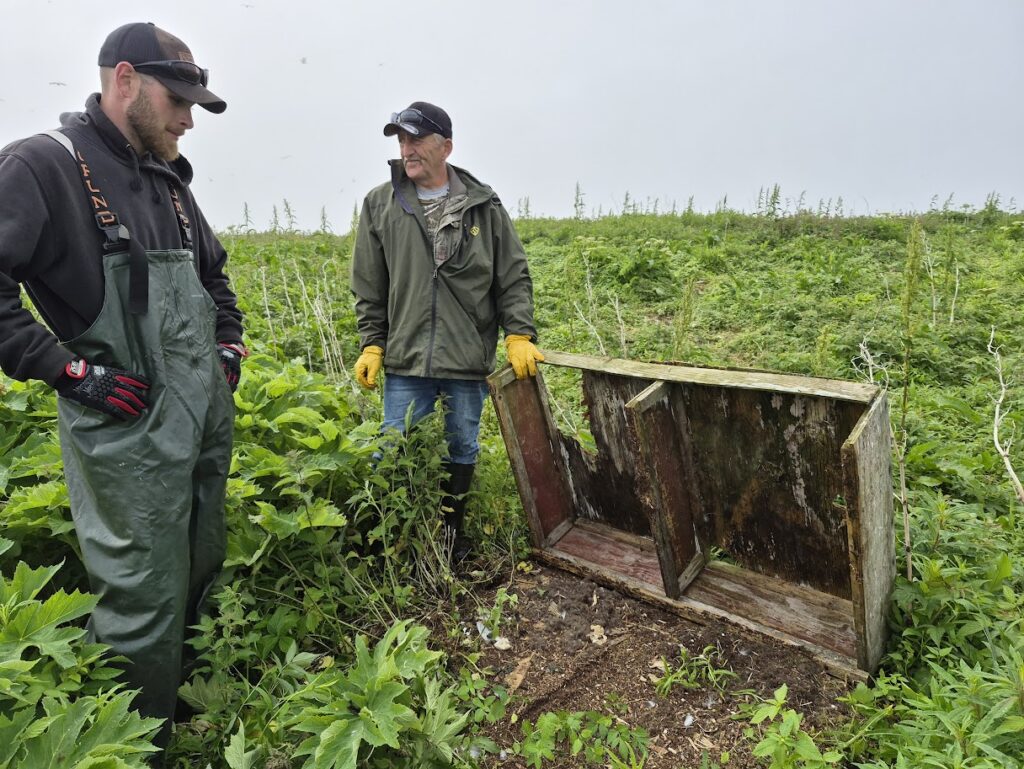
In the years immediately following, anecdotal reports of banded eider ducks returning to Hare Bay gave hope for the project’s success. In the meantime, local resident Eddie Pilgrim and others began constructing artificial nest shelters to help nesting hen eiders protect their eggs from predators such as gulls and foxes. They installed hundreds of the two-chambered wooden structures, designed by wildlife researchers, on several islands in Hare Bay.
Over time, nest shelters deteriorate from prolonged exposure to weather. As they break down, predators find easy access through holes in the plywood roof and weaknesses in the frame. Eventually, the roof collapses to the ground, causing habitat damage and creating a deterrent to nesting.
For the past decade, QLF has been a key partner in eider habitat restoration along with Intervale, local hunters, Ducks Unlimited Canada, Wildlife Habitat Canada, and Justin Boyd of J & B Outfitters in Main Brook.
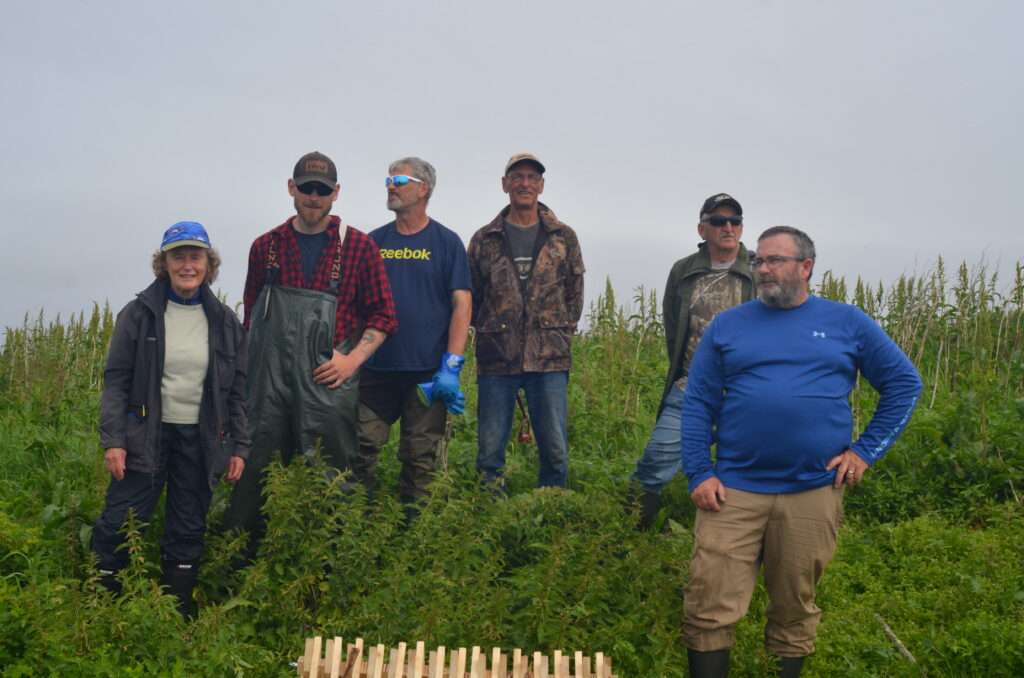
As the son of Barb Genge, who was a leader in the eider captive rearing and release project of the 1980s, Justin is committed to stewardship of Hare Bay eiders. This summer, under Kathleen’s direction, Justin and four other hunters from the surrounding area, along with Intervale and QLF staff, traveled to several islands in the bay to inspect and repair or remove nest shelters. One of the hunters was Todd Patey, whose late mother, Ethel, was another leader in the prior captive rearing and release work.
In recent years, wildlife researchers in Nova Scotia have come up with what they believe to be an improved nest shelter design that may result in less risk of predation. This summer the team in Hare Bay decided to give the new design a try. They constructed ten new shelters and installed them on three islands, one of which was Apron Island, as a pilot study. Apron Island has particular significance as the release site in the 1980s for the captive reared eiders. For Justin, Todd, and the rest of the team, working towards a hopeful future for eider ducks of Hare Bay is a worthwhile endeavor.
Photograph by Clarence Goodyear