First-Time Quebec-Vermont Partner Meeting
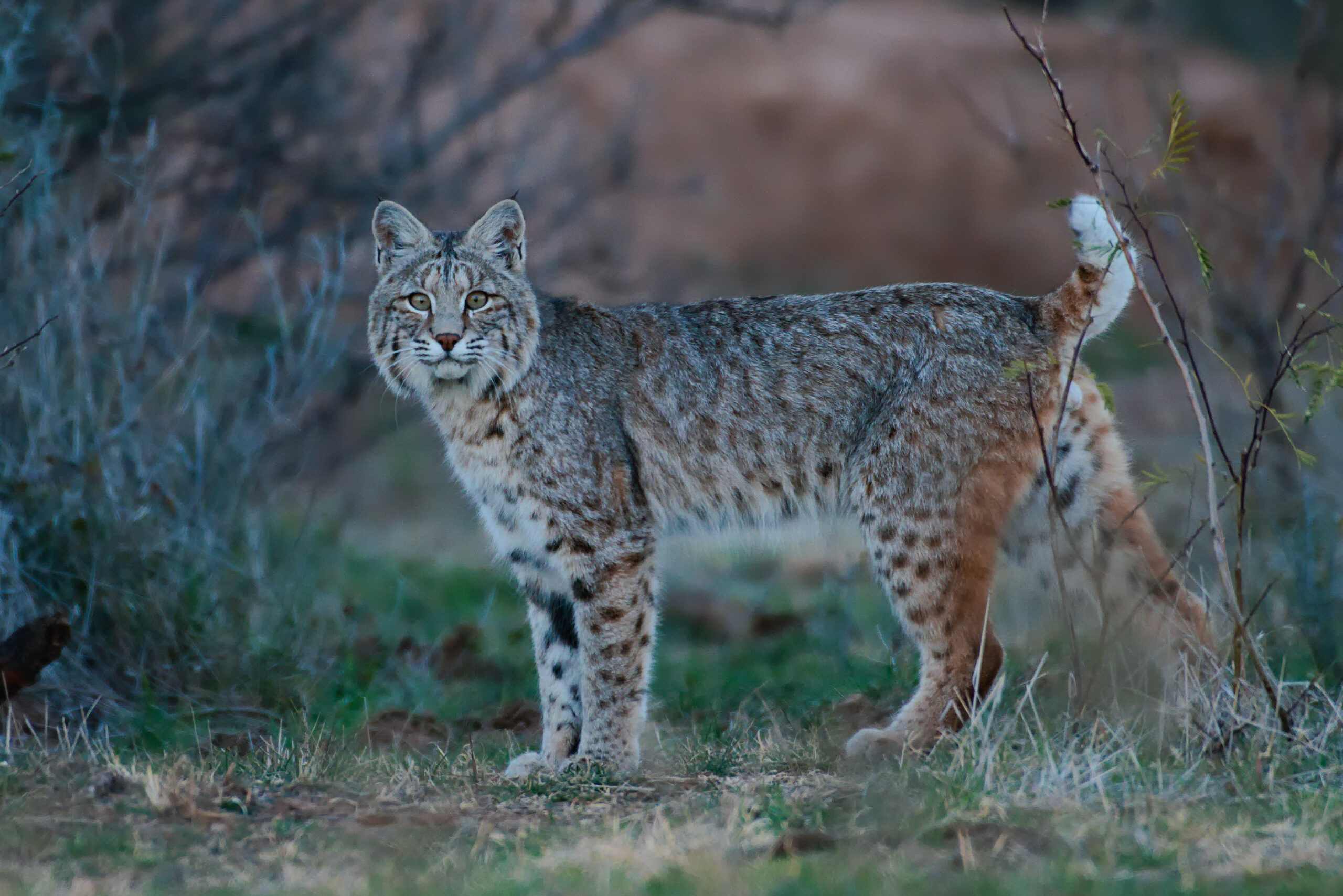
Male bobcats have vast home ranges that can span up to 130 square miles. If you saw a bobcat in the woods, you would have to walk for more than a day – potentially several – to cover its range.
A key component of conservation is monitoring how diverse species – wildlife, plants, people – inhabit their landscapes. When we map these data, two things become clear. First, our warming climate is causing a northward shift of plants and animals that will only increase over time. There is an urgent need to find ways to allow for this unimpeded flow north through ecologically well-connected landscapes and habitat corridors. Second, there is enough scientific data to show which corridors are the most critical.
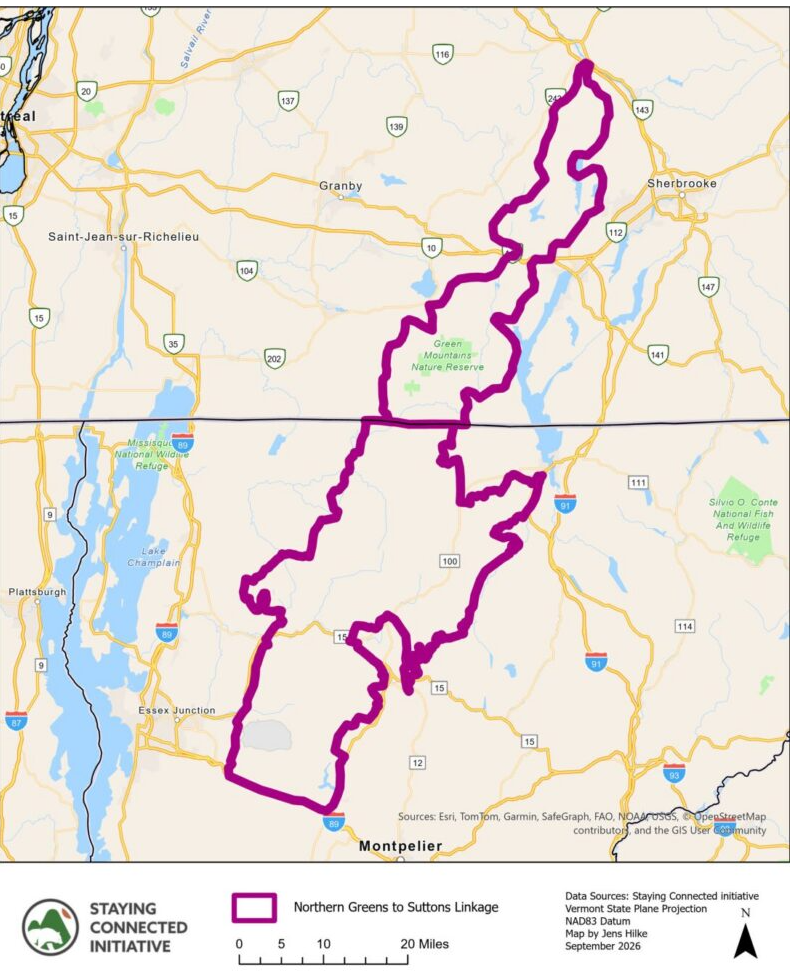
The Staying Connected Initiative, in which QLF has become a key partner over the past few years, has created interactive “story maps” of high-priority landscapes and corridors in the Northern Appalachian-Acadian region and adjoining areas to guide the conservation efforts of its 80+ partners. One of these key landscapes is the transboundary “linkage” in the Northern Green Mountains-Sutton Mountains region in Vermont and Quebec, which encompasses more than 700,000 acres (nearly 300,000 hectares). This priority area was the focus of the first-time gathering that QLF convened with partners in June.
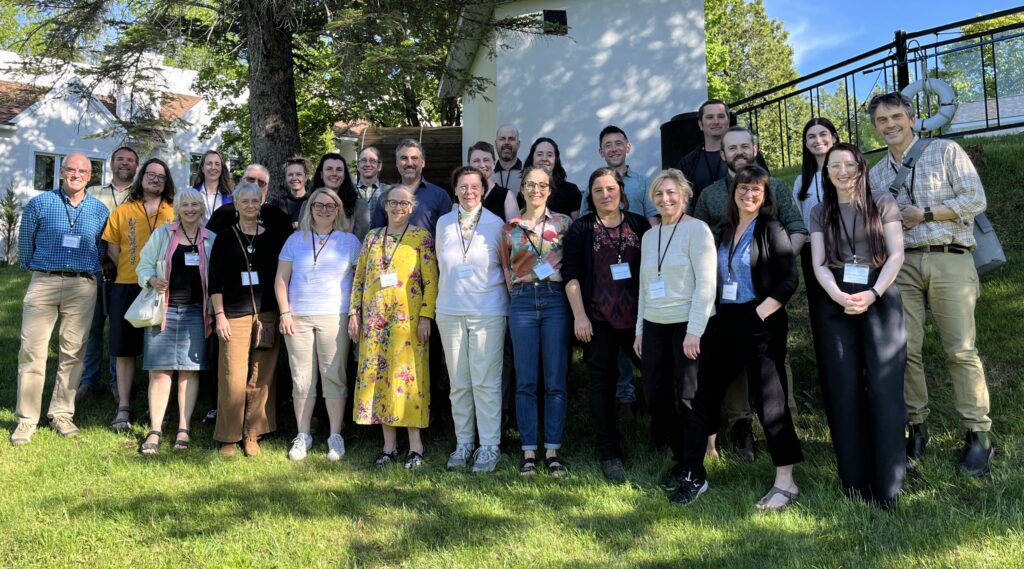
At the meeting, nearly 30 people from government agencies, nonprofits, regional and community groups, academic institutions, and others came together in Sutton, Quebec, for two days of presentations and discussions. The goals were to build relationships across the border, share information and ideas, and explore how best to accelerate collaborative efforts to conserve and restore well-connected lands and waters in this important linkage.
Participants first shared approaches, successes, and lessons learned from their work advancing connectivity conservation, and then addressed key needs going forward. They discussed differences in how protected and conserved areas are defined in Quebec and Vermont, and the need to address conservation gaps particularly in lower-elevation habitats. They also stressed the need for connectivity efforts to expand beyond forests to include freshwater systems, watersheds, shoreline integrity, and geological diversity. The group also highlighted the importance of integrating ecological information with social, cultural, and Indigenous perspectives to reflect the relationship between communities and the landscape. This work will require further efforts to build and strengthen relationships with Indigenous Nations and local communities, ensuring that their perspectives and knowledge meaningfully shape this work.
In the coming months, participating organizations will develop a shared transboundary vision, which will reflect both their existing work and binational identity. There also is keen interest in similar transborder gatherings in the months and years ahead, and looking for opportunities for joint projects, messaging, and fundraising. Another kind of linkage began in Sutton, Quebec, one made possible by bringing people together across the border and fostering a free flow of ideas to build momentum.
An excellent event. The work each group is doing is making such a difference. It makes sense that we know what is happening in the region outside our own organization. The border should fade into the background as we work toward mutual goals.
–reflection of a workshop participant
The Quebec-Labrador Foundation was instrumental in making this meeting happen. Phil Huffman, QLF’s Senior Vice President, Regional & Global Programs, spearheaded the organizing effort and served as lead facilitator at the gathering. Alexa Schubak, QLF’s Director, Conservation & Stewardship, Maritimes and Director, Special Programs, and Emily MacDonald, QLF’s former Coordinator, Conservation & Stewardship, Maritimes (until mid-August), were key members of the organizing team and provided invaluable assistance at the gathering.